Stop Core Maxxing, Play The Long Game: A BEGINNERS GUIDE TO A STRONG CORE (PART 1)
Let’s de-influence ourselves and DIVE INTO THE ANATOMY BEHIND why a strong core is about more than six-pack abs.
“Engage your core.
Draw your belly button to your spine.
Hug your ribs towards your hips.”
If you've ever been to a Pilates class, lifted weights, followed a fitness video or worked with a trainer, you've probably heard a variation of instructions telling you how to engage your core. But what does it actually mean? And more importantly, how are you supposed to know whether you're doing it correctly?

Somewhere between fitness culture, social media and the pursuit of visible abs, “core engagement” has become annoyingly overly complicated. Scrolling through reels, you see endless videos promising the secret to a stronger core, the perfect waist, better posture or a flatter stomach. You’re promised a singular method, exercise series or supplement that can help achieve that chiseled look.
But, listen, your core isn't designed primarily to look good. Your core exists as a central link in movement. Your core is structure, it’s movement, it’s cohesion. Learning how to properly work with your core is a hidden secret to movement resilience, injury prevention, improved movement habits and an overall more functional and healthy lifestyle. Without a strong and functional core we would all be wiggly, wobbly bodies struggling to do simple day-to-day tasks. I mean, if you’ve been taught by me you know that I am all for the wiggles and wobbles, but there’s a way we can wiggle and wobble in a functional and safe way. And oh yes, you’ve probably guessed that it’s through learning how to properly work with your core.
So, what actually is your core?
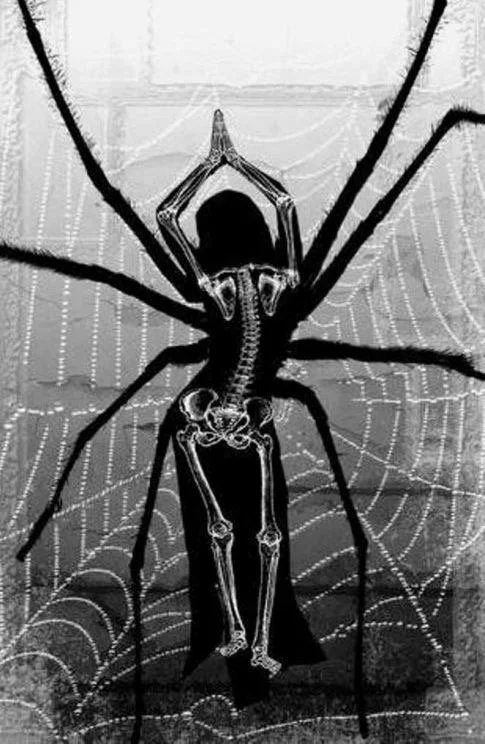
I like to think of the core as a spiderweb. It extends out, integrating with and wrapping around your midsection and beyond. Importantly, your core isn't one muscle. It's a whole system of muscles and structures that work together to support your trunk, transfer force and help you respond to movement.
When we talk about the core, we're often referring to muscles including the transverse abdominis, obliques, rectus abdominis, multifidius (alongside other spinal muscles), the pelvic floor and diaphragm.
Yep, they’re big words and probably don’t mean anything to you or make much sense. That’s okay, you don’t need to be able to name them. What’s most important is gauging an idea of where they are in your own body. This helps to build a stronger mind-body connection and allows you to recruit the correct muscles during different workouts or during day-to-day business. Also it’s pretty cool to know how to switch your core on effectively.
So, let’s go back to the spiderweb.
Just as a web is a masterpiece of natural engineering, built from distinct, interconnected sections that each serve a specific purpose, the core is built through a series of interconnected muscles and structures.
Imagine the centre of the web beginning around your belly button. Sitting deep within the abdominal wall lays your transverse abdominis. It wraps around your trunk and acts as a natural corset for core stabilisation and support. Despite its value, the depth can make it hard to physically feel and isolate. Just as a spider takes care in building the web’s frame, developing this deeper sense of connection takes time and patience.
The internal and external obliques are the intersecting strands. They run diagonally across the trunk, crossing and connecting with other structures. They help you rotate, side-bend and resist movement, much like the diagonal threads that give a spider's web its shape and ability to distribute forces.
Defining the web further, are your Rectus Abdominis. Extending up and down, they offer the web more definition, becoming the droplets of water that shine on the surface of your web (your six-pack muscles).
Now, we all know that a spider’s web doesn’t simply hover in thin air (though that would be pretty cool). In order to hold its shape, create tension between threads and support the weight of the spider and its prey, the web is connected above and below to outside surfaces. The surface it connects to at the top is your diaphragm, moving with every breath and contributing to the management of pressure within the trunk. Your pelvic floor is the surface that the web connects to at the bottom. It acts as a stable base, responding to changes in pressure, breathing and movement, coordinating with and empowering the muscles above and below it.
And oh yes, it gets even juicer…
Only 10% of spider webs are two-dimensional, the vast majority of spider webs found in nature are three-dimensional structures. In terms of the core, this is where the muscles of your spine come into the picture. Your core continues to extend beyond your belly button, layers of muscles wrap around your back-body, aiding in the support and control of the body core as you move.
your core isn't a single muscle that you need to “switch on”. It's like a spiderweb. Centred around your belly button and extending in every direction - front to back, side to side, and top to bottom.
IT’S JUST BLOODY MAGICAL.

So yes, contrary to what we perceive online, your core is so much more than the six-pack muscles. It’s a carefully curated system built through a series of interconnected muscles and structures, each contributing to the strength and integrity of the whole…
A STRONG CORE ISN’T ABOUT CREATING AN AESTHETIC. Your core is resilience, it’s injury prevention, it’s improved movement habits.
A STRONG CORE supports vitality, life and joy.
You can find out more about how to actually build a strong core in part 2 of this blog by clicking here.
Or if this has piqued your interest, I offer more in depth 1:1 movement coaching sessions online and in Manchester to support your fitness journey. Don’t hesitate to get in touch with me at info@movewithconnie.co.uk