Stop Core Maxxing, Play The Long Game: A BEGINNERS GUIDE TO A STRONG CORE (PART 2)
Social media, influencer-culture and quick fixes are over-simplifying what it means to build a strong core. Having the language to describe this and that is one thing. But actually learning how to feel and work with your core is another.
But first, let’s clarify what having a strong core does/doesn’t mean.
Having a strong core doesn’t = having six-pack abs or being skinny
Having a strong core does = feeling capable, empowered and moving with greater confidence and freedom
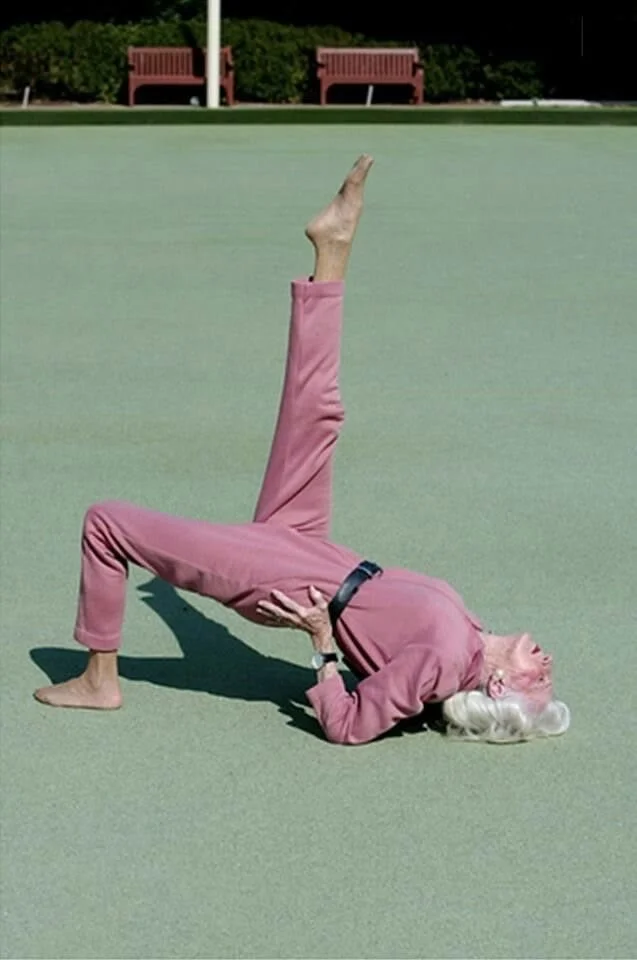
Wholeheartedly, I believe that the act of building a strong core is to create a body that supports you in living, moving and doing the things you love. A healthy, strong and adaptable core isn't about looking picture perfect. It isn’t about being the “fittest” in the room. A strong core is about nurturing your body so that it can support you and move with you through life. As a beginner, the most beautiful, albeit also frustrating thing is that there isn’t one exercise that everyone can magically do.
If you’re wanting to create a truly strong core you have to strip it back. Start simple. Re-introduce yourself to your belly. Build an awareness. Be curious, COMPASSIONATE and practice patience.
Think about your core as a spider web (read my last blog post on this here!), your core is built through a series of interconnected muscles and structures, each contributing to the strength and integrity of the whole. It reaches up, down, to the front, back, sides of you.
With so many intersecting components, there isn’t a quick fix to building a strong core. However, over time, your core will become noticibly stronger not because you've sucked the belly button in as tightly as possible, but because you've taken your time to teach the whole system to connect, coordinate and respond in real-time.
But yes, I know that we live in a culture hyperfixating on vanity metrics and quick fixes. So much so that we are so used to measuring fitness and strength by what we can see. How defined are my abs? How flat is my stomach? How quick can I do this movement? How quick can I get results?
But, trust me, the true measure of change comes from noticing. It’s about asking yourself to bring awareness to the present moment and RESISTING THE URGE TO SEEK A QUICK FIX.

Let’s put this into an example…the transverse abdominis (what the helly is that?!)
Our transverse abdominis is a deeply situated muscle wrapping around your inner abdomen (find out more on the TA here). Though a key player in core strength and stability, you cannot easily see or feel it. Compared to the tangibility of the “six-pack” muscle, our rectus abdominis, its hidden nature means that popular discourse often overlooks it.

Yes crunches and hanging leg lifts will help you build your “six-pack” muscles. But it’s not going to work if the muscle this is built on isn’t actively being strengthened or in most cases, not even brought into consideration!
And this is where it gets even more tasty…
Building strength in the transverse abdominis is mostly a neurological process. Progress relies on rewiring your nervous system and creating new neurological pathways. Simply put, your brain has to rebuild the mind-muscle connection and build an awareness of something basically non-existent in our minds.
So, to effectively revitalise something from scratch, consistency and patience have to become your new best friends (yes, they will be the kind of friends that you love but also find super annoying).

The Practice: Start small and then repeat, repeat, repeat
Here’s a simple and repeatable practice for you to try at home. This practice will help you in learning how to properly engage your transverse abdominis:
Lay on your back, bent knees
Big breath to soften your belly
Identify your neutral pelvis position (perhaps a slight arch of the lower spine, gap between body and mat)
Bring your hands to your pelvis
Inhale and melt your ribs into the mat, exhale and begin to tip your pubic bone into your hands, dropping your lower spine into the ground, inhale and pause here, exhale release your pelvis, returning to neutral
Each time you practice this, whether it takes a couple of minutes or slightly longer, can you start to notice any small micro changes in your experience? Perhaps; the sensation and momentum your breath creates to help you move an extra inch, the feeling of control you have over your lower abdomen as you find the posterior tilt of your pelvis or your ability to relax the breath in your chest whilst staying active at your tailbone.
This entire practice might seem counter intuitive because the results aren’t tangible right away (trust me, I thought that too when I first started this work).
But, with a practice like this, the ultimate goal is to build consistency. It becomes about building a habit, gradually re-training your mind-body so that you can carry what you learn on the mat into everyday movement without consciously thinking about it.
Our brain and body are funny like that, they’re a pretty magical team when we learn to work with rather than agaisnt them.

Final thoughts…
Give yourself the permission to let this be a slow-burner. Core strength develops because you repeatedly expose it to movement and gradually ask it to do more. Think, small amounts of practice, repeated often, eventually becoming progressively more challenging over a long period of time.
Your core is the best investment you can make. By nurturing a strong core, you strengthen a system that extends across your entire body.
In some romanticised way, I really believe that core work is an act of love to your current and future self. It’s a love letter you are carefully curating, adapting, building.
You can find out more about the anatomy behind building a strong core in part 1 of this blog by clicking here.
Or if this has piqued your interest, I offer more in depth 1:1 movement coaching sessions online and in Manchester to support your fitness journey. Don’t hesitate to get in touch with me at info@movewithconnie.co.uk